Language Learning

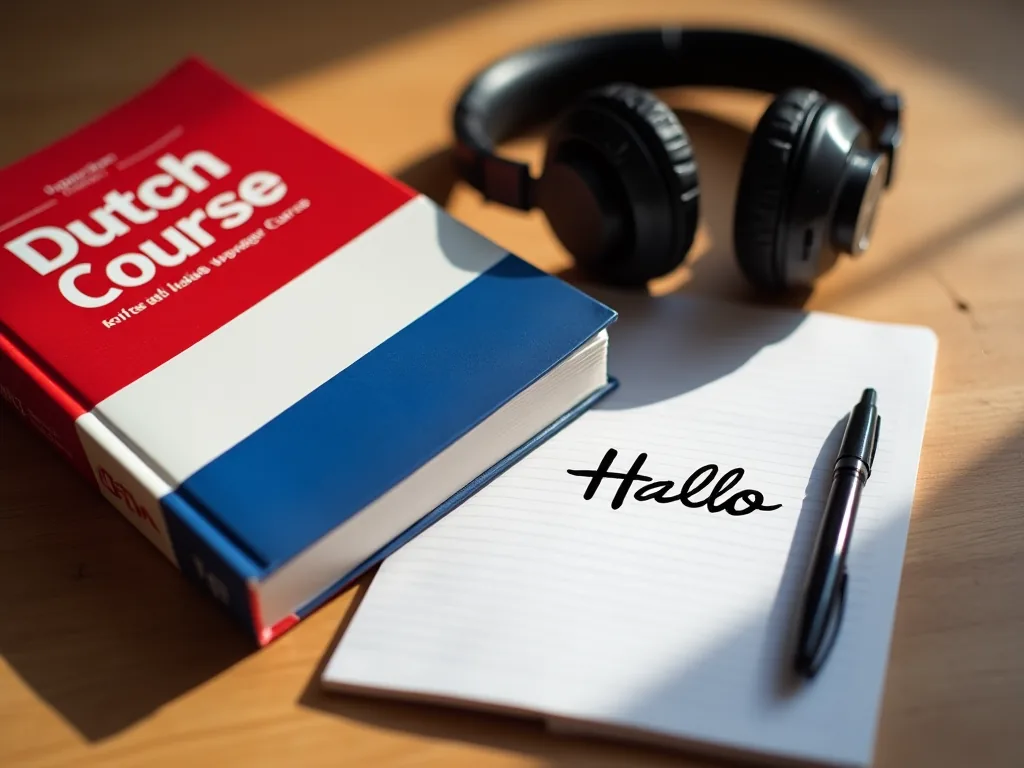
Dutch Language Course

A practical introduction to Dutch for learners who want to understand and use the language in daily situations. This guide explains pronunciation, word order and the most useful vocabulary in straightforward terms, with example dialogues that show how Dutch speakers greet, ask questions, make plans and talk about themselves. Study it steadily at a pace that suits you.

Levels
4
Starting from
185 credits
Category
Language Learning

About this study guide

Dutch shares many words with English and German, which gives English speakers a helpful head start. This material builds on that familiarity, beginning with the sounds that often cause difficulty, such as the guttural g and the vowel combinations ui and ij, before introducing everyday vocabulary for home, work, food and getting around.

Grammar is presented in small, manageable portions. You will read about de and het, verb positions in main and subordinate clauses, separable verbs and the most common past tense forms, each supported by short dialogues and example sentences taken from ordinary situations.

Across four levels, from Beginner through Intermediate and Advanced to Expert, the guide gradually widens your range, so that reading signs, writing a short message or following a simple conversation becomes more natural over time.
Each level is unlocked separately

Choose a level

Compare the levels below and add the one that suits you to your cart

01
Level 1

Beginner

185 credits

What this level includes
  • Covered in this level

    Dutch pronunciation, with particular attention to the guttural g and the vowel combinations ui, ij and eu, plus greetings, numbers, days and vocabulary for home and food. You will also learn the articles de and het and the basic verb-second word order of simple statements.

  • Suited to

    Meant for people with little or no Dutch who want a practical start. English speakers often find many words familiar, and this level uses that head start to make the first steps feel manageable while clearing up the sounds that tend to cause trouble.

  • What you will be able to apply

    After working through this level you should be able to pronounce common Dutch words more clearly, introduce yourself, ask simple questions, order food and form short present-tense sentences with the verb in the correct position.

02
Level 2

Intermediate

385 credits

What this level includes
  • Covered in this level

    Word order in subordinate clauses after omdat, dat and als, separable verbs such as opbellen and meenemen, the perfect tense with hebben and zijn, modal verbs, and diminutives with -je. Model dialogues cover work, travel, the doctor and making arrangements with friends.

  • Suited to

    Aimed at learners who know basic Dutch vocabulary and word order but hesitate when conversations move quickly. This level suits you if you want to handle practical situations such as making plans, shopping or arranging appointments with more ease.

  • What you will be able to apply

    You will be able to talk about past events in Dutch, explain reasons and conditions using subordinate clauses, split separable verbs correctly, and manage everyday arrangements in shops, offices and social settings with growing confidence.

03
Level 3

Advanced

685 credits

What this level includes
  • Covered in this level

    The flexible little words er, toch, maar, eens and even, passive constructions with worden, the imperfect tense of strong verbs, placement of multiple verbs at the end of a clause, and common idioms. The material also compares formal u with informal je in different contexts.

  • Suited to

    For learners who already communicate comfortably in Dutch and want to sound more natural and precise. Choose this stage if you understand most everyday speech but still stumble over the small words, idioms and word-order subtleties that native speakers use effortlessly.

  • What you will be able to apply

    By the end of this stage you should be able to use er in its various functions, soften requests with particles, read newspaper-style Dutch with good understanding, and adjust your tone between formal emails and relaxed conversation.

04
Level 4

Expert

985 credits

What this level includes
  • Covered in this level

    Stylistic differences between Netherlands and Flemish Dutch, advanced verb clusters and the red and green word orders, nominalisation in formal writing, fixed expressions and proverbs, and the subtle contrasts between near-synonyms. Challenging example texts are analysed to show how these elements combine.

  • Suited to

    Written for experienced users of Dutch who want to refine their command of the language. It suits anyone who reads and speaks well, and now wants to deal with fine distinctions of style, regional variation and complex sentence construction.

  • What you will be able to apply

    You will be able to write polished Dutch for formal purposes, recognise regional and stylistic variation, construct long sentences with complex verb clusters confidently, and choose expressions that fit the tone and audience precisely.

Levels are unlocked with credits from your balance. You can add more credits at any time.